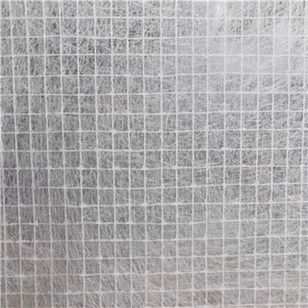
Why can fiberglass hold up the high-end computing power industry chain?
Since the explosion of large-scale AI models, market attention has been focused on popular sectors like GPUs, HBM, and advanced packaging. However, upstream in the industry chain, a very low-profile yet irreplaceable basic material is becoming a key bottleneck restricting high-end server production capacity-electronic-grade fiberglass.
This seemingly traditional fiberglass is now quietly taking center stage in the AI computing power competition.
01 The Unassuming "fiberglass" is the Skeleton of the Entire PCB
Many people's understanding of fiberglass is still limited to traditional applications like wind power, fiberglass, building corrosion protection, and automotive lightweighting. But in reality, electronic-grade fiberglass cloth is the core substrate for AI server PCBs and copper-clad laminates.
Simply put: half of a PCB's performance depends on the fiberglass cloth.
Fiberglass cloth, resin, and copper foil together constitute the circuit board substrate, directly determining the server motherboard's:
✅ Dimensional stability, flatness, and deformation resistance
✅ High-temperature resistance and aging resistance
✅ High-speed signal transmission quality and low dielectric loss performance
Ordinary mobile phones and home appliances have very low requirements for fiberglass; conventional E-grade fiberglass is sufficient. But AI servers have a completely different set of stringent standards.
02 In the AI Era, Traditional Fiberglass Is Completely Insufficient
With the widespread adoption of 224G and 448G ultra-high-speed signals, server PCB layers have increased dramatically, and computing density has skyrocketed. Circuit boards operate under high temperature, high frequency, and high load conditions for extended periods.
This places extreme demands on fiberglass:
📌 Extremely low dielectric loss to ensure high-speed signals do not attenuate or distort.
📌 Extremely low coefficient of thermal expansion to prevent board deformation and delamination at high temperatures.
📌 Ultra-high weaving precision and extremely low impurity rate to ensure the stability of high-end packaging.
Over the past two years, high-end electronic glass cloth has consistently been in short supply. AI servers, high-speed switches, and high-end packaging substrates are all vying for production capacity, directly leading to longer lead times and tight quotas in the industry.
It can be said that without high-end fiberglass, there are no high-performance computing PCBs, and even the most powerful chips cannot operate stably.
03 Industry Giants Re-enter the Market After 20 Years
Amidst a severe imbalance between supply and demand, established material giants have chosen to make a significant comeback.
Recently, NEC Glass officially announced that it will begin mass production of electronic-grade fiberglass for AI servers in the spring of 2027, and will expand production to twice the original planned capacity in the second half of the year, with a total investment of 5-10 billion yen.
It is worth noting that NEC withdrew from the electronic fiberglass industry 20 years ago.
What has brought this established giant back to the market?
The answer is straightforward: the massive incremental growth brought by AI, and the high added value of high-end materials.
Currently, the company's samples have been approved by customers, and the products focus on lower loss and higher power efficiency, precisely targeting the needs of high-end computing hardware. Compared to the continuously competitive and declining profits of traditional automotive fiberglass, AI electronic fiberglass has become the core pillar for the company's future turnaround and growth.
04 High-end materials remain a highly monopolized market.
Unlike the highly competitive ordinary fiberglass market, the high-end electronic fiberglass industry has extremely high barriers to entry and a highly concentrated market structure.
Low dielectric, Low CTE ultra-high precision glass cloth has long been dominated by a few overseas companies, with deep technological barriers, long certification cycles, and extremely strong customer loyalty.
This explains why, despite the booming AI market, upstream materials remain in short supply: high-end production capacity is difficult to replicate quickly, and the technology is not something everyone can replicate.
05 AI Competition Has Already Reached the Top-Tier Materials
Today's AI industry competition is no longer just about chips, algorithms, and server systems.
From HBM, ABF substrates, and high-end substrates to today's electronic-grade fiberglass, industry dividends are continuously shifting towards upstream basic materials.
Those who truly weather cycles and benefit in the long term are often the "shovel sellers" at the very top of the supply chain.
Fiberglass, a seemingly traditional material, is ushering in a new era of industrial upgrading in the AI computing power age. The low-end market is about price and scale; the high-end electronics market is about technology, barriers to entry, and stable supply.
In the next two years, as AI computing power construction continues to accelerate, the tight supply-demand balance of high-end electronic fiberglass will persist for a long time.