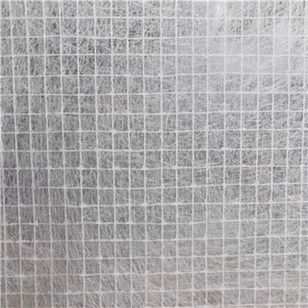
Raw Materials And Production Process Of Alkali-free Fiberglass Mat
Alkali-free fiberglass mat, or simply alkali-free fiberglass mat, is an ultra-thin, flexible non-woven fabric product made from alkali-free glass as the base material, through drawing, web formation, curing, and post-treatment. Unlike medium-alkali and high-alkali glass fiber products, the alkali-free formula gives the material a lower alkali metal content, effectively avoiding problems such as moisture hydrolysis and performance degradation, making it suitable for long-term, harsh operating environments.
I. Main Raw Materials of Alkali-Free Glass Fiber Mat
1. Basic Glass Raw Materials The core uses an E6 alkali-free glass formula, which is currently the mainstream environmentally friendly alkali-free system in the industry. The main mineral raw materials include quartz sand, pyrophyllite, limestone, dolomite, boric acid, etc., with strict control over the alkali metal oxide content to ≤0.8%. Various raw materials are precisely proportioned to ensure the glass melt's high-temperature resistance, easy drawing, and strong chemical stability, fundamentally improving the mat's aging resistance, insulation, and corrosion resistance.
2. Reinforcing and Bonding Raw Materials
The binder is crucial for the formation of fiberglass veneer. The mainstream choices are pure acrylic emulsion and modified epoxy resin water-based binders, which are environmentally friendly, odorless, and offer high bonding strength and hydrolysis resistance after curing. Specialized coupling agents, commonly silane coupling agents, are used to improve the bonding force between the glass fiber and the binder, enhance the overall flexibility of the veneer, and prevent later bending, breakage, powdering, and delamination.
3. Auxiliary Functional Additives
A small amount of additives are added according to the product application: defoamers eliminate air bubbles during pulping and sizing to ensure a smooth veneer surface; wetting agents improve the uniformity of binder penetration; mildew inhibitors and weather-resistant additives are used for outdoor and corrosion-resistant veneers, adapting to complex working conditions.
II. Alkali-Free Fiberglass Veneer Production Process
1. Raw Material Melting and Glass Drawing
The proportioned mineral raw materials are fed into a furnace and fully melted, clarified, and homogenized at approximately 1500℃ to form a uniform, impurity-free molten glass. 1. **Glass Fiber High-Speed Drawing:** Molten glass is drawn at high speed through a platinum spinneret into ultra-fine continuous glass fibers, which are then stretched and cut by a high-speed airflow to produce chopped glass fibers of specified lengths with uniform diameter. This is a core step ensuring stable weight distribution of the thin felt.
2. **Wet Slurry Preparation and Uniform Mixing:** The chopped, alkali-free glass fibers are fed into a slurry tank, where water and a dispersant are added for thorough mixing and dispersion to prevent fiber clumping. Low-speed circulation and stirring create a glass fiber suspension slurry with uniform concentration and good fiber dispersion. Precise control of the slurry concentration lays the foundation for subsequent web formation; this step directly determines the uniformity of the thin felt thickness.
3. **Wet Forming and Web Laying:** The prepared slurry is uniformly conveyed to the forming screen. Excess water is quickly removed using a vacuum dehydration device. The glass fibers randomly interweave and overlap on the screen, naturally forming a continuous and uniform fiber blank felt layer. Compared to the dry process, wet forming results in more uniform fiber distribution and a finer, non-porous felt surface, suitable for mass production of ultra-thin, high-weight glass fiber felts.
4. Impregnation, Curing, and Shaping: The raw wet felt blank passes through an impregnation tank, where it evenly absorbs water-based adhesive and functional additives, with the amount of adhesive applied controlled within a standard range. After impregnation, it is sent to a hot air drying and curing oven for segmented temperature-controlled drying, gradually evaporating moisture and allowing the adhesive to fully cross-link and cure, tightly binding the loose glass fiber to form a finished thin felt with certain tensile strength and stiffness.
5. Post-processing, Slitting, and Rewinding: After curing and cooling, the glass fiber thin felt undergoes surface modification treatment according to application requirements to improve waterproof, corrosion-resistant, and bonding performance. Finally, online quality inspection checks for defects such as broken felt, holes, and thickness deviations. It is then precisely slit, trimmed, and rewound according to customer specifications, packaged, and stored, completing the entire production process.
III. Key Points of Alkali-Free Glass Fiber Thin Felt Process
The production of alkali-free glass fiber thin felt requires extremely high attention to detail. Deviations in any parameter, such as kiln temperature, fiber length, adhesive application amount, or drying temperature, can lead to uneven product weight, insufficient tensile strength, and poor water resistance. Standardized raw material formulations and automated wet-process production lines are the core guarantees for the production of high-quality alkali-free fiberglass mat.
The performance advantages of alkali-free fiberglass mat rely on the support of low-alkali, high-purity raw materials and refined wet-process production technology. With the rapid development of the new energy, energy storage, and corrosion-resistant infrastructure industries, downstream demands for the insulation, weather resistance, and ultra-thinness of fiberglass mat are continuously upgrading. Therefore, improvements in raw material formulations and intelligent upgrades in processes will become the long-term development direction of the industry.