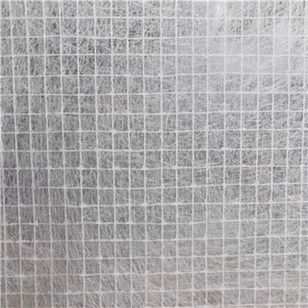
Breaking The Monopoly On High-end Electronic Fabrics: Industrial Opportunities For Quartz Electronic Fabrics
In the era of skyrocketing AI computing power, the iteration speed of optical modules has repeatedly refreshed industry perceptions, rapidly leaping from 400G to 800G and 1.6T. Many focus on core components such as optical chips and switches, but overlook the unsung heroes supporting stable high-speed signal transmission. The seemingly insignificant PCB board is actually the core carrier of high-speed signal transmission, and electronic cloth, as the PCB's skeletal material, is crucial in determining signal transmission efficiency and stability. When traditional fiberglass electronic cloth struggles to meet the demands of ultra-high-frequency signal transmission, quartz electronic cloth has risen to prominence, becoming a core material for connecting the high-speed computing power industry chain. Today, we delve into the core value, technological barriers, and breakthrough path of domestic substitution of quartz electronic cloth.
In the world of high-speed signal transmission, quartz electronic cloth is undoubtedly the foundational material. Many people have a misconception that the performance of 800G optical modules relies heavily on optical signal transmission, but this is not the case. In a complete signal transmission chain, electrical signals are first transmitted on the PCB board, then connected to an optical chip for electro-optical conversion. The quality of the PCB board directly determines the upper limit of signal transmission, and electronic fabric is the core framework of the PCB.
In the low-speed era of 400G and below, traditional fiberglass electronic fabric could barely meet market demands and adapt to signal transmission standards. However, with the advent of the 800G and 1.6T ultra-high-speed era, everything has changed. Industry signal frequencies have soared from the previous 25GHz and 50GHz to over 100GHz, exacerbating the shortcomings of traditional electronic fabric.
If we compare high-frequency signal transmission to driving a sports car, a PCB built with traditional electronic fabric is like a bumpy gravel road. A high-speed sports car is prone to bumps and loss of control; in signal transmission, this translates to signal jitter, data packet loss, and transmission errors. To ensure smooth transmission of ultra-high-frequency signals, the gravel road must be upgraded to a smooth and unobstructed highway, and quartz electronic fabric is the core answer to this upgrade.
Compared to traditional fiberglass electronic cloth, quartz electronic cloth possesses three irreplaceable core advantages, precisely addressing the industry pain points of high-speed transmission. First, its extremely low dielectric loss minimizes energy attenuation during signal transmission, a crucial requirement for efficient transmission in 800G and even 1.6T optical modules. Second, its superior dielectric consistency; the finer and more uniformly arranged quartz fibers avoid the structural inconsistencies caused by traditional fiberglass weaving, reducing signal transmission interference at its source. Third, its robust thermal stability; the power consumption of high-speed AI optical modules continues to rise, with 800G modules consuming tens of watts and 1.6T products exceeding 25 watts. High temperatures can easily cause PCB deformation and photoelectric alignment misalignment, while the excellent thermal expansion resistance of quartz electronic cloth ensures long-term stable operation of the equipment.
The rise of quartz electronic cloth is not merely a technological innovation in a single material, but a comprehensive upgrade of the entire high-end computing power industry chain. Its industrial chain is intricately linked, from upstream quartz sand purification to midstream quartz fiber spinning and quartz electronic cloth weaving, and downstream copper-clad laminate and PCB manufacturing, ultimately empowering optical modules and AI servers. The continued explosive growth of the AI industry drives demand for high-end computing power, which in turn forces material upgrades. This positive cycle of the industrial chain is the underlying logic behind the continued popularity of quartz electronic cloth.
Looking at the global high-end electronic cloth market, it has long been dominated by foreign companies. Companies like Nittobo, with over 30 years of experience in low-dielectric materials, have built high industry barriers through their deep technological accumulation. The core competitiveness of foreign manufacturers is not production capacity, but rather their extremely high yield rate. Their high-end electronic cloth yield rate has consistently remained above 95%, while many latecomers generally only maintain a yield rate of 70%-80%. This gap cannot be bridged simply by purchasing equipment; it is the result of both accumulated materials science knowledge and meticulous process control. In addition, companies like Shin-Etsu Chemical and Asahi Kasei have long dominated the market, collectively controlling about 70% of the global high-end electronic fabric market share.
Where there are barriers, there are breakthroughs. After years of technological accumulation, domestic companies have finally achieved a key breakthrough in the quartz electronic fabric sector, officially opening a new chapter in domestic substitution. Among them, Feilihua, Sinoma Science & Technology, and Honghe Technology have become the leading domestic players, each competing in the high-end market with their unique advantages.
Feilihua is a benchmark player in the domestic quartz fabric sector, having built a complete industrial chain from quartz sand purification, quartz rod processing, quartz fiber spinning to quartz electronic fabric weaving. It is also one of the few companies globally with complete integrated production capacity. Currently, its products have successfully entered core applications such as AI servers, high-speed optical modules, and high-end packaging substrates, making it the closest domestic player to international top-level standards.
Sinoma Science & Technology focuses on a full-category layout, covering ordinary fiberglass electronic cloth, low-dielectric electronic cloth, and high-end quartz electronic cloth. Leveraging the industrial advantages of its subsidiary Taishan Fiberglass, it has successfully entered the supply chains of leading global server manufacturers such as NVIDIA and Huawei, steadily advancing market penetration through its scale advantage and systematic capabilities.
Honghe Technology, on the other hand, specializes in ultra-thin electronic cloth, possessing strong technological influence in the 9-micron-level ultra-thin cloth field. These products are core raw materials for high-end PCBs. With its superior product strength, it has successfully entered the systems of top-tier clients such as NVIDIA, TSMC, and Apple, establishing a firm foothold in the high-end precision electronic cloth market.
In the second half of the computing power competition, materials are king. The large-scale deployment of 800G is a foregone conclusion, and the commercialization of 1.6T is drawing ever closer. The demand for high-speed, high-frequency transmission will continue to drive the iteration of electronic cloth towards high-end products. In the quartz electronic cloth sector, which has long been monopolized by overseas companies, domestic enterprises have already broken through the technological barriers. With the release of production capacity and continuous optimization of processes, domestically produced quartz electronic cloth will gradually break the overseas monopoly and become the core underlying force supporting the vigorous development of China's AI computing power industry.