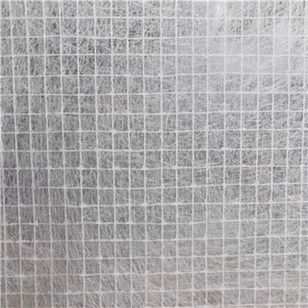
How to choose the weight, thickness, and specifications of chopped strand mat?
Many customers frequently ask the following questions during consultations:
1: I work in industries such as storage tanks, sheet metal, and sanitary ware. What weight should I choose for my products?
2: Once the weight is determined, how does thickness relate to weight?
3: How do I choose the right production process and dimensions to avoid waste and maintain product quality?
4: How do I distinguish between powder felt and emulsion felt (emulsion felt)?
5: What should I do if workers say it's too hard or too loose during construction?
6: How should I store it? Will it get damp, etc.?
I. First, you need to know what weight, thickness, and width represent:
1. Weight (unit: g/㎡)
This refers to the weight of chopped strand mat per square meter. It's the most crucial parameter, directly determining the product's strength, impregnation speed, and cost.
2. Thickness
Generally related to basis weight: Higher basis weight results in greater thickness, better strength, and higher product quality. However, it increases resin usage, requires a longer impregnation time, and slows down worker operations.
3. Width and Weight
Standard widths: 1040mm, 1250mm, custom widths are also available upon request.
Weight is generally 30kg or 38kg per roll. The weight per roll will vary depending on the width and basis weight.
II. How to Choose the Most Common Basis Weight for Fiberglass Chopped Strand Mat? Direct Reference Instructions for Corresponding Application Areas
1. 100g/㎡ Low-weight Chopped Strand Mat
- Features: Thin, lightweight, fast resin impregnation
- Applications:
- Surface layer, decorative layer
- Fiberglass product surface layer
- Small area repairs, transition under gel coat layer
- Advantages: Smooth surface, less prone to fiberglass striations
2. 225g/㎡ General Purpose (High-volume use)
- Features: Balanced, easy to apply, high cost-effectiveness
- Applications:
- General hand lay-up fiberglass
- Small storage tanks, pipes, profiles
- General anti-corrosion projects, flat panels, curved panels
- Recommendation: First choice for new customers and conventional products
3. 300g/㎡ Medium-High Strength
- Features: Higher strength, denser molding
- Applications:
- Ship fittings, RV shells, bathroom fixtures, bathtubs
- Cooling towers, larger tanks
- Products requiring high rigidity and flatness
Advantages: Fewer layers, higher efficiency, stable overall strength
4. 450g/㎡ (Relatively Thick/Dedicated to Structural Layers)
- Features: Large thickness, high strength, high work efficiency
- Applications:
- Structural layers, load-bearing components
- Large storage tanks, pipelines, important anti-corrosion projects
- Compression molding, pultrusion, continuous molding
- Note: Resin impregnation time is slightly longer; ensure thorough impregnation during construction.
III. How to Choose Thickness? Correspondence with Weight
In actual production, thickness is not arbitrarily determined; it must match the mold, process, product, and other relevant requirements.
- 100g/㎡: Thinner, mainly for surface/transition.
- 225g/㎡: Moderate, most commonly used in hand lay-up.
- 300g/㎡: Thicker, balances structure and surface.
- 450g/㎡: Thick, mainly for structural layers, reducing the number of lay-up layers.
Simple selection guideline:
- Prioritize appearance, smooth surface → Choose low basis weight (100/225)
- Prioritize strength, structural stress → Choose high basis weight (300/450)
- For rapid mass production, fewer lay-up layers → Prioritize 300/450
- For hand lay-up beginners, small parts → Prioritize 225
IV. Choosing chopped strand mat for different processes to avoid pitfalls
1. Hand lay-up process
Recommended: 225g/㎡, 300g/㎡
Key points: Fast resin impregnation, moderate hardness, easy degassing, good handling, suitable for complex curved surfaces. 2. Compression Molding/Pultrusion Process
Recommended: 300g/㎡, 450g/㎡
Key Points: Uniform thickness, good fiber dispersion, stable molding, and high consistent strength.
3. Anti-corrosion Engineering (Flooring, Storage Tanks, Anti-corrosion Lining)
Recommended: 225g/㎡, 300g/㎡
Key Points: Good impermeability and corrosion resistance, easy construction.
4. Bathroom Fixtures/Automotive Parts/Decorative Parts
Recommended: 225g, 300g
Key Points: Smooth surface, easy to sand, good gel coat adhesion.
V. Four Key Points Customers Easily Misunderstand – Avoid Them After Reading
1. Focusing Only on Price, Ignoring Weight
Insufficient weight leads to insufficient strength, resulting in cracking and deformation of the product later, and higher rework costs.
2. The Thicker the Better
Excessive thickness leads to: excessive resin consumption, difficulty in removing air bubbles, exceeding weight limits, and difficulty for workers to operate during construction. 3. Width Mismatch with Equipment: Excessive cutting waste and scrap directly increase material and labor costs.
4. Ignoring Adhesive Type: Powder-bonded chopped strand mat and emulsion-bonded chopped strand mat have different applications; choosing the wrong type will affect impregnation time and product strength.
VI. One-Minute Quick Material Selection Summary
- Surface Layer/Repair: 100g/㎡
- General Hand Lay-up/Conventional Products: 225g/㎡
- Sanitary Ware/Marine/Medium-Sized Tanks: 300g/㎡
- Structural Layer/Large Equipment/Pultrusion Molding: 450g/㎡